Pest control service in Orlando provides homeowners and property managers with structured interventions against wood-destroying organisms, aggressive stinging insects, and persistent subtropical vectors. Properties across Orange County face continuous pest pressure fueled by extreme humidity, sandy soils, and year-round warmth, demanding treatments that survive severe afternoon precipitation.

Pest Control Service in Orlando is a targeted professional extermination and prevention intervention that eliminates active insect or rodent infestations and establishes protective perimeter barriers around residential and commercial structures.
Every service reflects the same meticulous attention to detail, whether it's a single job or a larger pest control service project across Orlando.
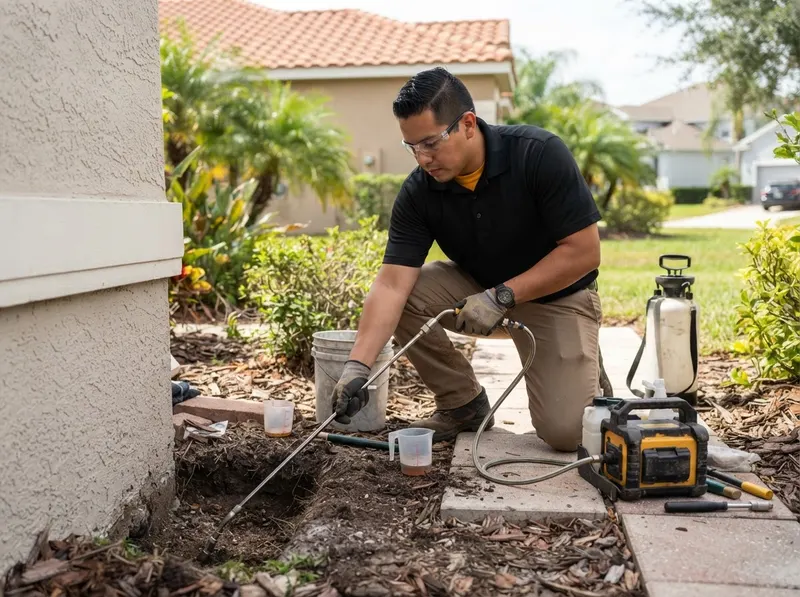
Subterranean termites, primarily the invasive Asian and native Formosan species, build underground mud foraging tubes through foundation fissures, plumbing core penetrations, and crawlspace pilings. This specialized structural treatment delivers continuous non-repellent liquid soil trenches alongside anchored exterior monitoring and baiting stations spaced every 10 to 15 linear feet around the home perimeter. Complete inspections examine stem walls, crawlspaces, and structural sills, using acoustic and thermal detection sensors to pinpoint active colonies inside structural framing. Technicians drill through attached concrete elements, including garage aprons, tiled patio slabs, and front entryways, injecting pressurized termiticide directly into void zones to form an unbroken chemical barrier. By combining non-repellent chemistry with insect growth regulator bait matrixes, worker termites unwittingly transfer active ingredients throughout the subterranean nest, eliminating the primary reproductive queen within 60 to 90 days. This intervention halts structural framing damage and includes documented verification paperwork compliant with Florida real estate transfer standards.
Get a quote →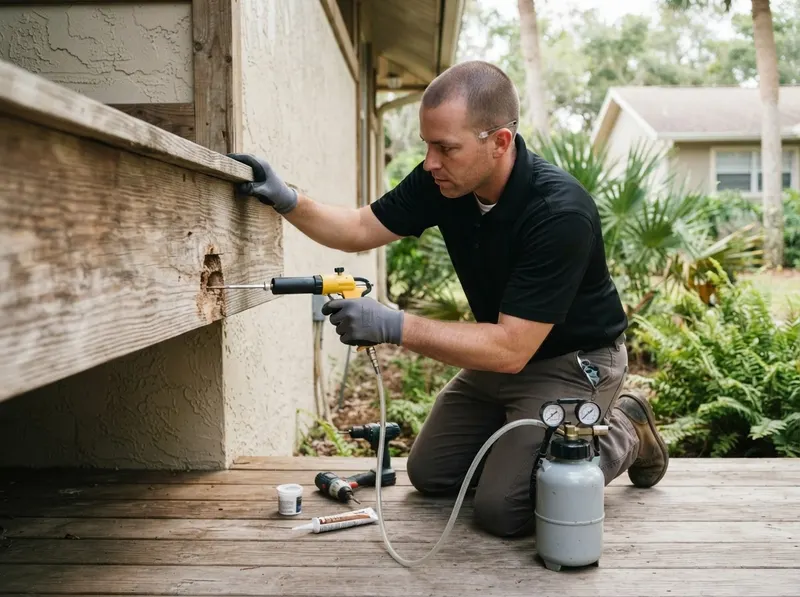
Drywood termites inhabit structural framing, exposed ceiling beams, door casings, and roof decking without requiring contact with the soil. Infestations are recognized by hexagonal fecal pellets accumulating on horizontal surfaces or window sills beneath kick-out holes. Technicians execute localized precision borate and chemical foam injections directly into infested timber galleries, expanding throughout the wood grain to eradicate internal colonies without requiring whole-house fumigation tents. For extensive structural infestations across inaccessible attic trusses, specialized direct-contact micro-emulsions and desiccant dusts are injected into structural junctions, sealing off colony galleries. Moisture meters and fiber-optic borescopes inspect cavity spaces behind drywall without unnecessary demolition. Post-treatment procedures seal exposed kick-out holes with timber sealant to prevent secondary swarmers from penetrating the same timbers during the spring flight window.
Get a quote →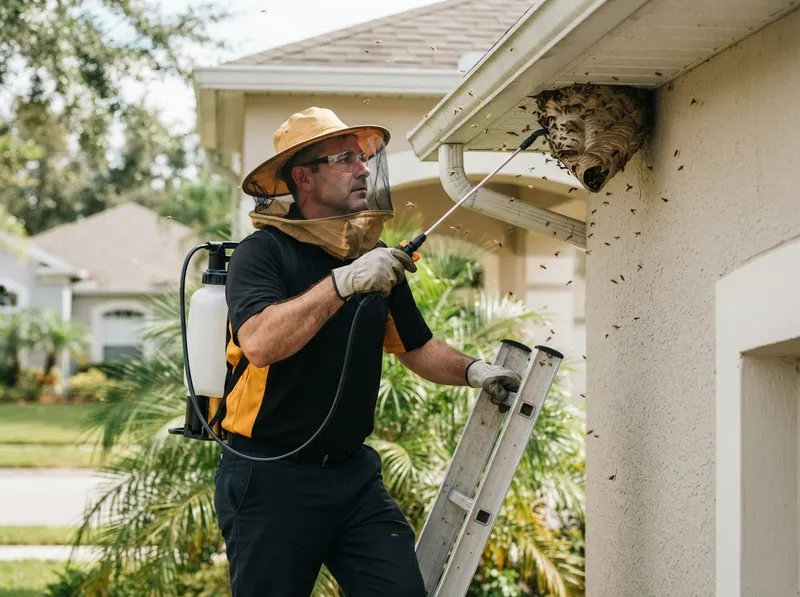
Stinging insect colonies construct nests along soffits, stucco frieze boards, structural fascia, and children's play areas, posing severe stinging hazards to property occupants. Rapid-response intervention uses specialized high-volume injection equipment to deliver freeze-action knockdown agents and residual dust formulations directly into exterior nest cavities, hanging paper combs, and concealed soffit voids. Protective suits and high-reach extension lances allow technicians to neutralize active yellowjacket colonies nesting inside subterranean ground cavities or block void walls from a safe operational perimeter. Once stinging activity ceases, technicians mechanically scrape away nest remnants, extract larvae chambers, and apply residual micro-encapsulated deterrents across structural attachment points to suppress future nest construction. This rapid service secures exterior entryways, swimming pool lanais, and roof eaves within 24 hours of dispatch, eliminating immediate safety risks.
Get a quote →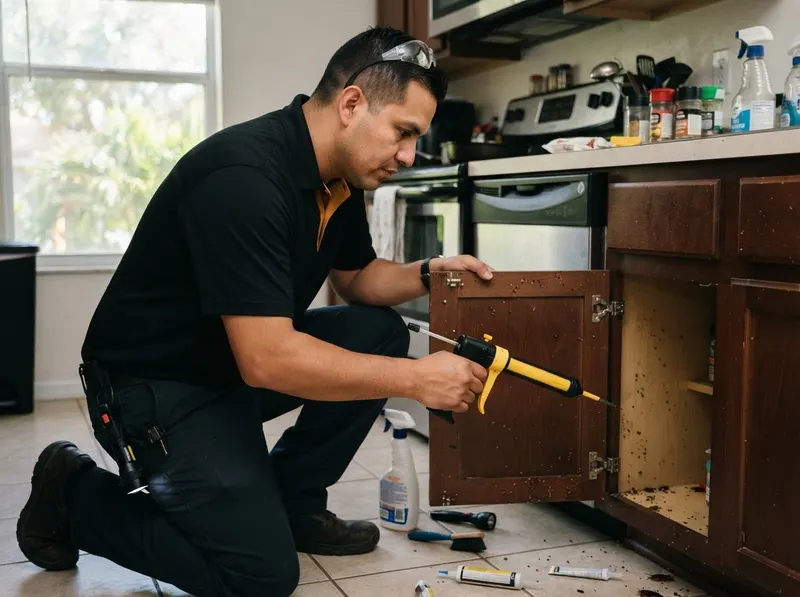
German cockroaches establish rapid-breeding populations in indoor microclimates, nesting behind commercial refrigeration gaskets, dishwasher motor housings, electrical switch boxes, and cabinet hinges. Eradication combines non-repellent residual insecticides, insect growth regulators (IGRs) that disrupt molting and reproductive maturation, and high-attractant feeding gels placed in protected voids. For severe kitchen infestations, high-efficiency particulate air (HEPA) vacuum extraction removes large volumes of adult roaches, egg capsules (oothecae), and allergenic droppings from localized wall voids before chemical placement. Technicians apply long-lasting diatomaceous and silica aerogel dusts behind electrical wall plates and structural baseboards to eliminate harborages without contaminating food preparation surfaces. Perimeter void inspections track migration pathways along plumbing lines shared across multi-unit structures, preventing re-infestation from adjacent units.
Get a quote →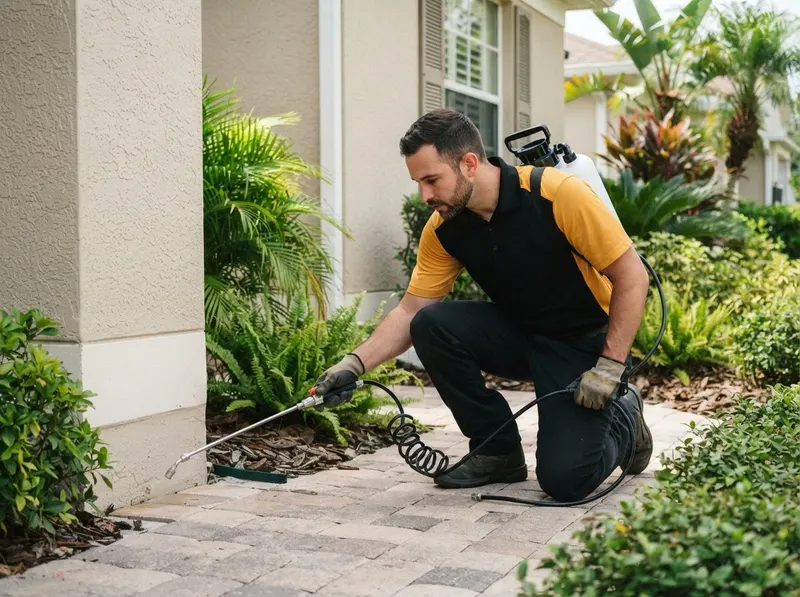
Large peri-domestic cockroaches, locally categorized as palmetto bugs and American cockroaches, migrate from damp outdoor mulch, storm drains, palm frond canopies, and municipal sewer lines into residential attics and living spaces. Treatment protocols focus on perimeter suppression using heavy, moisture-resistant granular baits distributed across garden beds, mulch zones, and perimeter vegetation where organic decay accumulates. Technicians spray continuous liquid water-resistant barrier bands spanning three feet up the foundation stem wall and three feet out across the soil, sealing window sill tracks, door thresholds, weeping vents, and crawlspace grates. Interior crawlspaces and attic spaces receive electrostatic dust applications into dead-air voids, neutralizing pests that bypass external landscaping before they breach ceiling drywall or light fixtures.
Get a quote →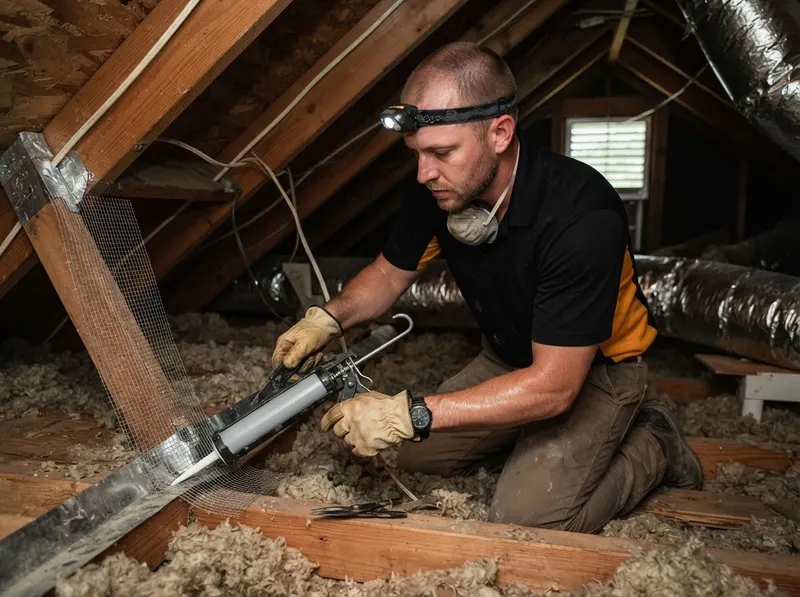
Roof rats exploit overhanging oak canopies and utility lines to gain access to barrel tile roofs, fascia gaps, soffit returns, and attic spaces across Orlando neighborhoods. Professional rodent intervention begins with an exterior structural survey identifying all entry points larger than a quarter-inch, followed by custom mechanical exclusions utilizing heavy-gauge galvanized steel mesh, copper flashing, and structural sealants. Within attic insulation and crawlspace voids, technicians place secured mechanical snap traps along designated foraging runways, monitoring and clearing traps during scheduled follow-up cycles without deploying uncontained rodenticides that risk indoor carcass decay. Insulation contaminated by rodent urine and feces is inspected to determine if spot sanitation or full replacement is required, and biological odor neutralizers are misted to eliminate pheromone trails that invite exterior colonies.
Get a quote →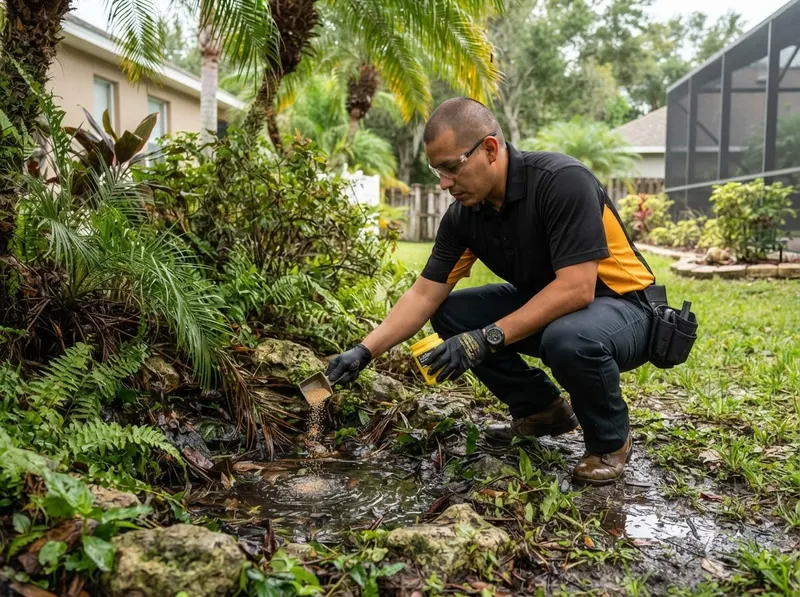
Subtropical rainfall patterns create ideal breeding conditions for Aedes and Culex mosquito species across residential yards, retention ponds, and low-lying turf areas. Intervention employs specialized motorized backpack mist blowers to apply micro-encapsulated adulticides and biological insect growth regulators to the undersides of dense foliage, ornamental shrubs, broadleaf ground covers, and soffit overhangs where adult mosquitoes harbor during daytime heat. Technicians treat uncirculated landscape water, decorative drainage basins, and gutter valleys using solid biological larvicides containing Bacillus thuringiensis israelensis (BTI), which target aquatic mosquito larvae without disrupting non-target aquatic life, birds, or domestic pets. Monthly applications throughout the summer rainy season disrupt the four-stage reproductive cycle, reducing adult mosquito populations across outdoor living zones, lanais, and swimming pool enclosures.
Get a quote →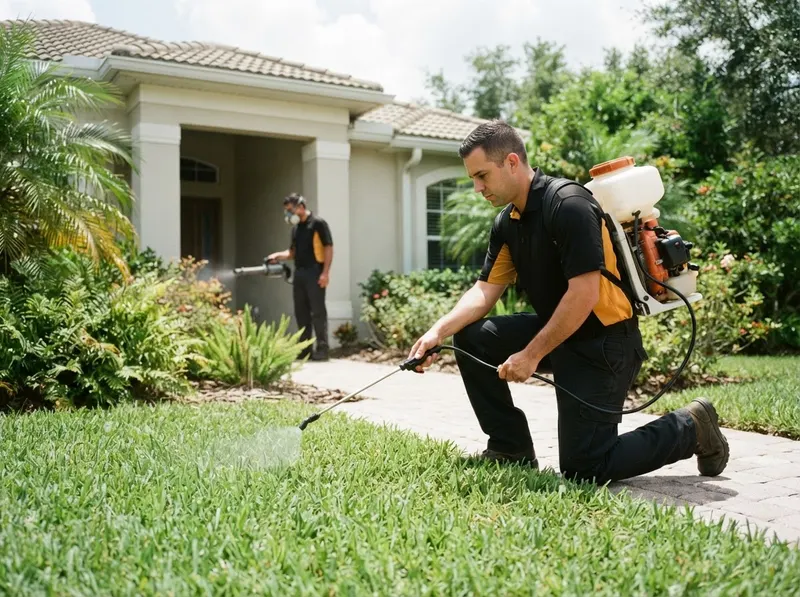
Fleas and brown dog ticks thrive in warm, sandy soils, establishing dense populations in shaded turf, sand patches, and interior carpeting that threaten domestic pets and family members. Treatment involves a dual-zone eradication strategy pairing indoor carpet and upholstery applications with comprehensive exterior turf treatments. Indoors, technicians apply rapid-knockdown adulticides paired with juvenile hormone analogs that sterilize eggs and arrest pupal development, requiring vacuum agitation to trigger dormant flea emergence into active residual zones. Outdoors, liquid and granular insecticidal formulations are distributed across shaded lawn zones, perimeter fence lines, and under-deck voids where wildlife vectors deposit parasites. Clear preparation protocols guide property owners on laundering, animal safety, and floor care to ensure unbroken chemical performance.
Get a quote →You get a firm, itemized quote for your pest control service before any work begins, no surprises, no pressure.
Careful prep, tidy work, and a full cleanup when we are done. We treat your home and belongings like our own.
The same trusted, background-checked team from the first call to the final check.
Selecting the correct intervention plan depends on the pest biology, structural foundation, and the immediacy of property risk. For sudden sightings of solitary paper wasps or localized German cockroaches inside a kitchen, a targeted clean-out provides rapid knockdown; for persistent subterranean termite activity or pervasive attic roof rat nesting, comprehensive structural remediation is mandatory. The critical trade-off centers on application scope versus immediate cost: localized spot treatments carry a lower baseline expense starting at $250 but leave structural entry points unshielded, whereas comprehensive exterior barrier and baiting installations require higher initial outlays between $550 and $1,400 yet provide complete perimeter saturation that stops structural entry through concrete expansion joints.
Property owners must choose between reactive single-event extermination to handle an immediate threat or sustained quarterly perimeter maintenance that withstands continuous breeding cycles fueled by Orlando's 52-inch average annual rainfall. If immediate interior infestation threatens culinary hygiene or tenant health, prioritize mechanical trapping paired with localized non-repellent micro-injections; if the objective is securing equity against structural deterioration, invest in anchored exterior bait systems paired with masonry drill-and-trench barriers. Omitting exterior perimeter maintenance to save upfront funds inevitably accelerates pest re-entry across permeable stucco and slab penetrations.
Every project gets a firm, written price after a free on-site visit. Ranges below for orientation.
Tell us about your pest control service job and we'll send a clear, written quote, usually the same day. Or just call and talk to a real Orlando pro.
(239) 695-8603
Orlando's unique subtropical climate, characterized by 52 inches of annual rainfall, high relative humidity, and sandy soil structures across Orange County, creates relentless biological pest pressures. The prevalence of slab-on-grade construction across master-planned communities like Lake Nona and Doctor Phillips provides direct entry paths for subterranean termites along expansion joints and plumbing cuts. Meanwhile, historic frame bungalows in College Park, Lake Eola Heights, and Thornton Park feature elevated crawlspaces, heart pine framing, and dense live oak canopies that leave structures vulnerable to drywood termite swarms, Carpenter ants, and roof rat attic incursions. Proximity to wetlands, retention basins, and major bodies of water like Lake Ivanhoe and Lake Eola fuels heavy mosquito breeding cycles and drives large American cockroaches out of municipal sewer infrastructure into residential perimeters during the intense summer storm season. Standard store-bought treatments fail rapidly because afternoon convective downpours wash away surface-applied barrier sprays unless water-resistant micro-encapsulated formulations are mechanically bound to building masonry.
Free estimates for Orlando & the surrounding area.
 Yellow Jacket Pest Control